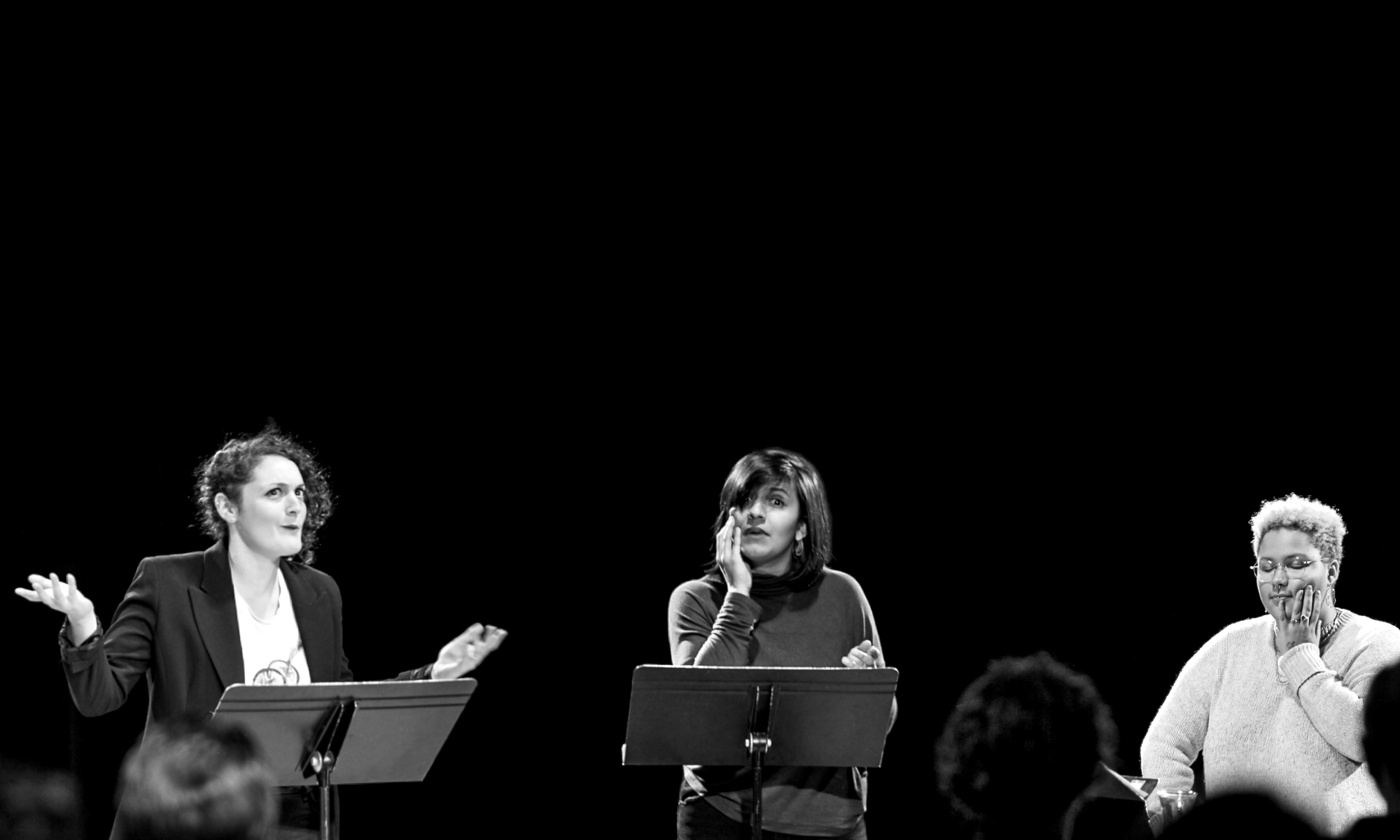
Digital Dramaturgy Integration Strategy (DDIS): The Process Beast

A reflection on process written by DDIS researcher, Erin Lindsay

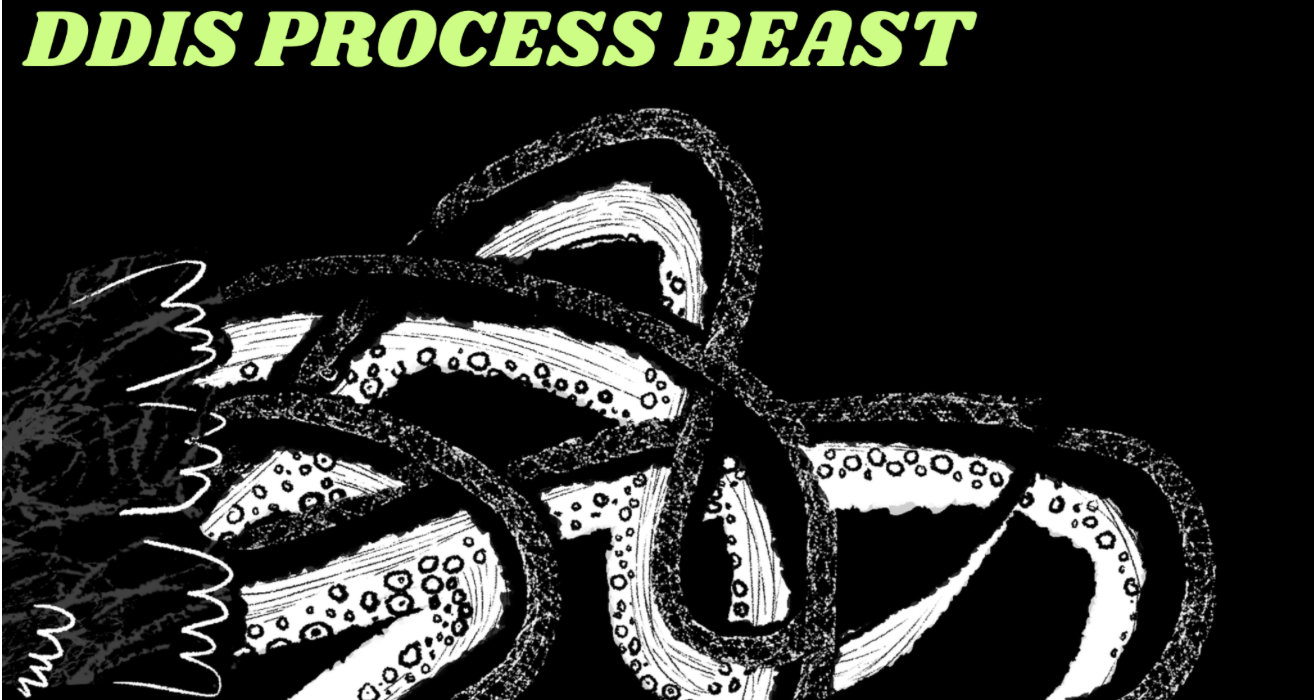
Graphic of the Beast by Emily Soussana


I had the privilege of being a researcher on the DDIS (Digital Dramaturgy Integration Strategy) conceived by Playwrights’ Workshop Montréal in partnership with potatoCakes_digital and with support from the Canada Council for the Arts. The project involved a long-form process supporting artist collaborators across the creation of 4 new Canadian live performance works focused on digital experimentation. It was led by digital dramaturgs Andrew Scriver and Emily Soussana (potatoCakes_digital) in collaboration with the following PWM dramaturgs: Fatma Sarah Elkashef, Aki Matsushita, and Leila Ghaemi. The collaborating creators/playwrights on the project were: Amanda Smith, Maxime Corbeil-Perron, Gillian Stone, Panthea Vatandoost, Scout Rexe, Emma Tibaldo and Lois Brown. A core facet of the project was its more than two-year duration, as well as the funds, time, and resources allocated to artists to foster experimentation and ongoing conversations across several workshops.
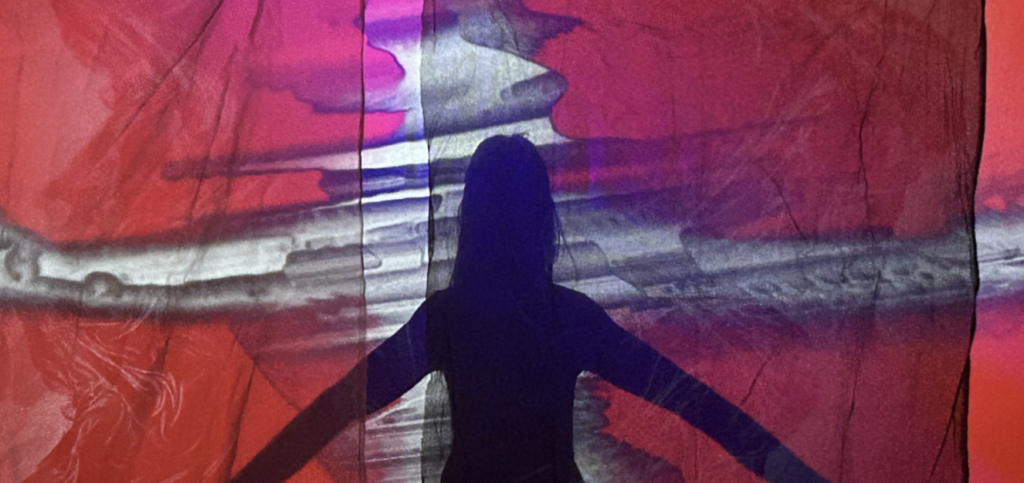
Dramaturg Aki Matsushita in the Blood Moon process 

The project also involved interviews with external artists and organizations whose work is informed by digital art to deepen the project and the team’s insights into digital processes in other sectors/disciplines. These external consultants included: Amy Chartrand (freelance narrative strategist;NFB: digital arts), Andrea Peña and Bobby Léon (digital arts, film and choreography), SAT (digital arts), Rilla Khaled (Concordia/TAG), Oasis Immersion (digital arts), Nadia Ross: STO Union (digital arts and theatre) and Kyungseo Min: Blizzard (narrative writing for video games). The DDIS process concluded with a public event in PWM’s studio that featured digital installations related to the process across all 4 workshops and a one-hour panel discussion with the project’s creators and dramaturgs.
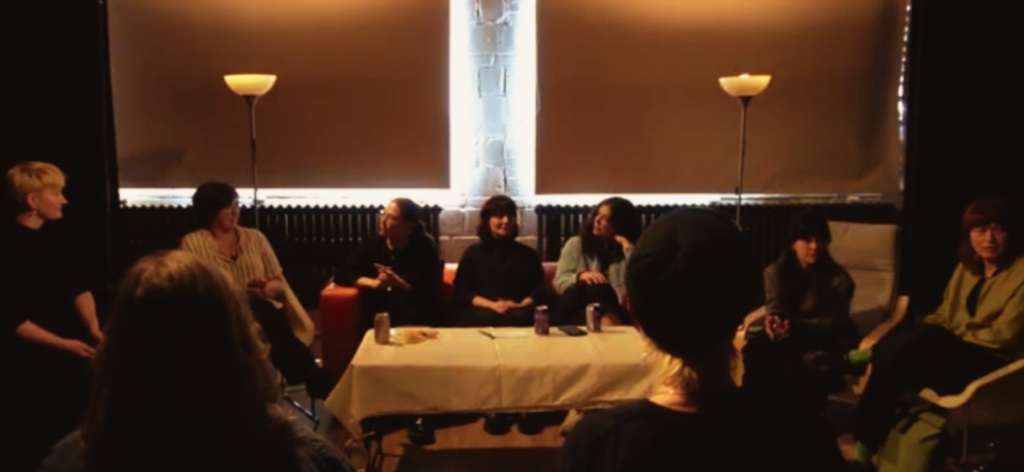
Panel discussion at PWM

DDIS aimed to explore the dialogue, questions, conversations, prototypes and connections that can emerge at the intersection of dramaturgical and creation practices and digital technology. 

We decided to name the project’s research outcome a “process beast” because of its various generative, sensing, evolving, and open-ended tentacles. The research work began in a more closed and conclusive container. We felt the need to broaden and open the research’s structure in favour of the “process beast,” because we felt its tentacles spoke to the porosity, sensitivity and agility needed for ongoing, process-centred learning. 

Over the course of the DDIS process, I became pregnant, birthed my son (a beautiful sweetie named Lawrence), and navigated the choppy and, at times, seemingly impossible waters of postpartum. PWM and potatoCakes_digital decided to keep me on the project, and they were incredibly accommodating, gentle and caring with me in this first tender year.

The DDIS team also ensured that another collaborating artist had a dark room to nurse in during her workshop. I will forever be grateful to PWM for being so understanding and flexible to this new artist parent. It is hopeful to know that this is possible in the arts. I want to sincerely thank interim DDIS researchers Tiernan Cornford and Madeline Scovil who stepped in with incisive insights and questions during my maternity leave. Thank you for your work. 

The learning (around process, collaboration, dramaturgy, experimentation, interdisciplinary work, modes of communication and ways of thinking about and approaching creation) was endlessly rich throughout this process. It is hard to fully take inventory of the impact DDIS has had on my life and practice. It is also nearly impossible to clearly define dramaturgy, let alone digital dramaturgy. I do think an attempt to reach at different articulations, definitions and perspectives of the practice is important. Sharing and making process visible feels essential to generative exchange. 

With this articulation and sharing around process in mind, let’s move on to the beast. 

Actor Cara Rebecca in the Cult Play process

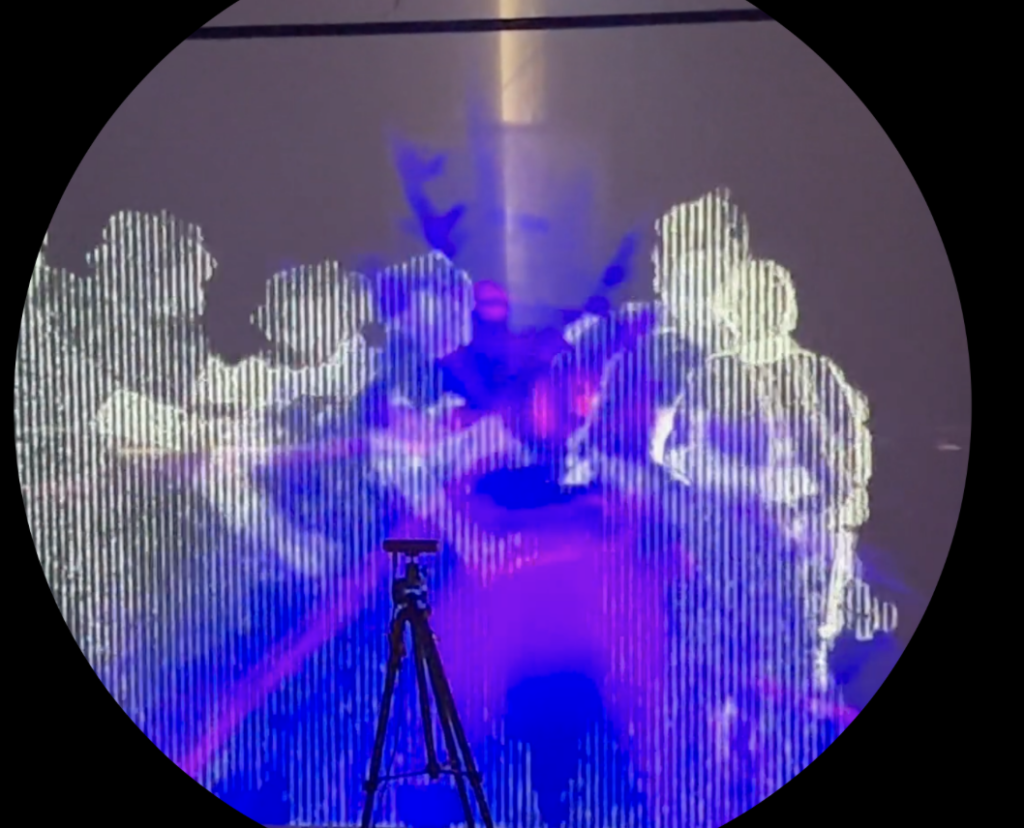
DDIS provided long-term dramaturgy to 4 projects at different stages of development. The workshops involved digital explorations with: audio-visual experiments, the genre of horror, live and projected translation and explorations with language, the impact of analog and digital technologies on memory and storytelling, the narrative tension that can exist between live and pre-recorded digital materials, possibilities of inclusive livestreamed performances, experimentation with illusion and architecture to convey dissociation and embodied emotion, and the role movement tracking can play in conveying setting and mood.
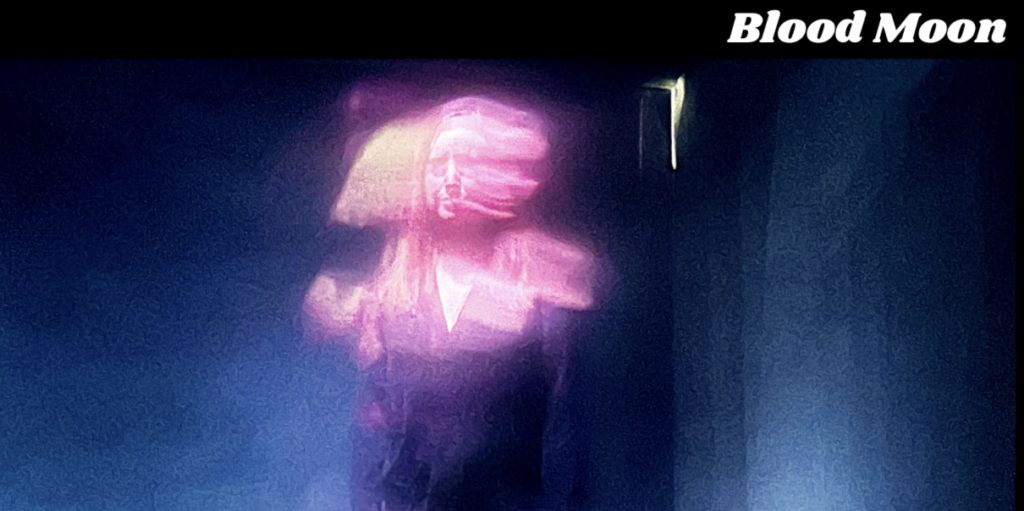
Singer Jacqueline Woodley in the Blood Moon process

As a researcher, the methods I used to gather information throughout  DDIS were: mind maps of key themes in each workshop; open-ended questions; overheard dialogue and conversations during the workshop process; recurring interviews with artist collaborators, external artists and organizations, and participating dramaturgs; and observation of rapid prototyping or media sketches from potatoCakes_digital that were created as part of each workshop’s development process and archived throughout the duration of the DDIS.

A process log was created for each workshop.
You can view one for the Blood Moon creation process here.

Ongoing conversation is essential to a dramaturgical practice and collaboration. Here are some excerpts from the dramaturgs and creators/playwrights who participated in the DDIS process.
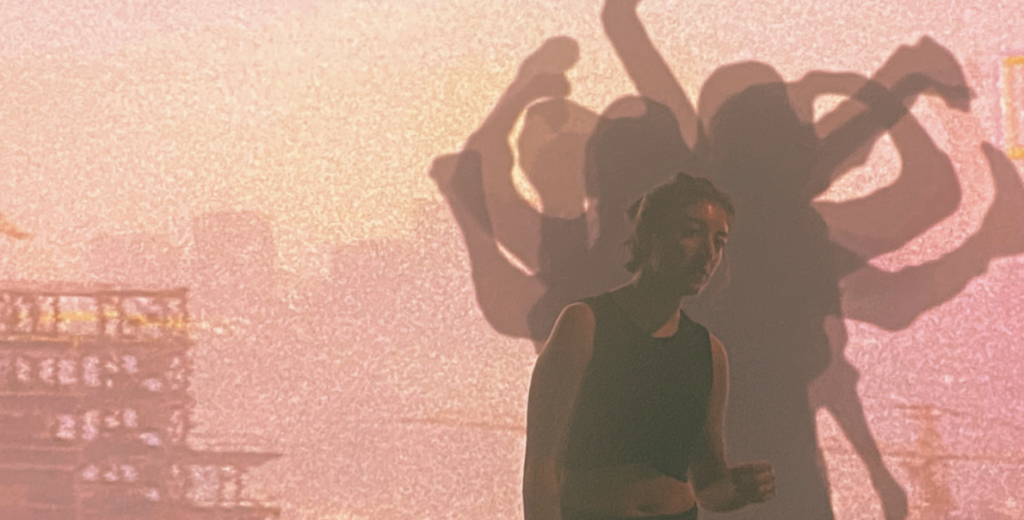
Actor Kimia Pourazar in the Zaboon process


SCOUT:

It’s transformative to get dramaturgical support that is curious, holistic and flexible rather than being prescriptive in a way that looks for a neat and tidy way of answering a question for a playwright. Creating outside of the pressures of production… that dramaturgical
support can provide a beneficial kind of companionship; a creative companionship in an endeavour that’s so existential. – Playwright, Cult Play


GILLIAN:
I do have forms of synesthesia that I work with internally. So to have that projected outside and to be informed by other brains, to have this external kind of synesthesia, it’s something I haven’t really done before. So that was really cool. Working in this way really expanded so much of this project.” –Gillian Stone, Blood Moon co-creator

AKI:

For Blood Moon, it was a very unconventional way of working. The affective explorations built with the singer in the room were especially interesting. I could see the anxiety build up as I watched the performer behind the scrim. I felt very open and receptive. It was a process that pushed me not to overprepare. It was one of those rare occasions where I’m responding in the moment. Not to a story or text yet. I wasn’t getting too heady. It was the excitement of starting from a premise that is not necessarily narrative-based. Through sound and projection mapping. Through exploring distortion as well. Exploring the feeling of a piece. Having an understanding of this feeling physically and viscerally before understanding what story we’re following. –Dramaturg on the Blood Moon process.

Playwright/co-creator/performer Lois Brown in the Invisible Me process 

LOIS:

We were really not sure how all of the equipment would work. It looks like we would have to rehearse it in a studio and then compact it down into a rig that could fit in my bedroom or downstairs, which would be made to look like my bedroom. Then I could do a performance from my house. A live Zoom. A digital format. It would also include some objects that are not live, and by objects I mean pieces of animation and design. Recordings. It’s interesting, when something is recorded I don’t think of it as me anymore. – Lois Brown, Invisible Me playwright/performer 

EMMA:

I think some of the false starts in terms of what kind of animation or technology was needed, what effect we were looking for…this was the dramaturgy. It was trying something and figuring out that wasn’t the way we wanted it to go. That also helped to simplify the text. It helped me figure out the order of everything. I do think that one of the biggest lessons for me was keeping the playwriting at the centre of it. I think reading the script every day recentered us because you didn’t come in with any idea of what the play was, but more of a concrete understanding of the play that day. – Director and Dramaturg for Invisible Me 

LEILA:

I think there is a lack of preciousness with digital dramaturgy. With kind of throwing stuff at the wall. It forces us to do the doing rather than the talking, which I think is great. It’s more than visual. It’s six senses. I operate with the six senses in a way where I try to create an ecosystem. I like to revisit Small Planet by Eleanor Fuchs to discover the six senses of a piece. To explore the initial impulses. I think digital dramaturgy is a tool. A tool for the six senses. –Leila Ghaemi, Dramaturg on Zaboon

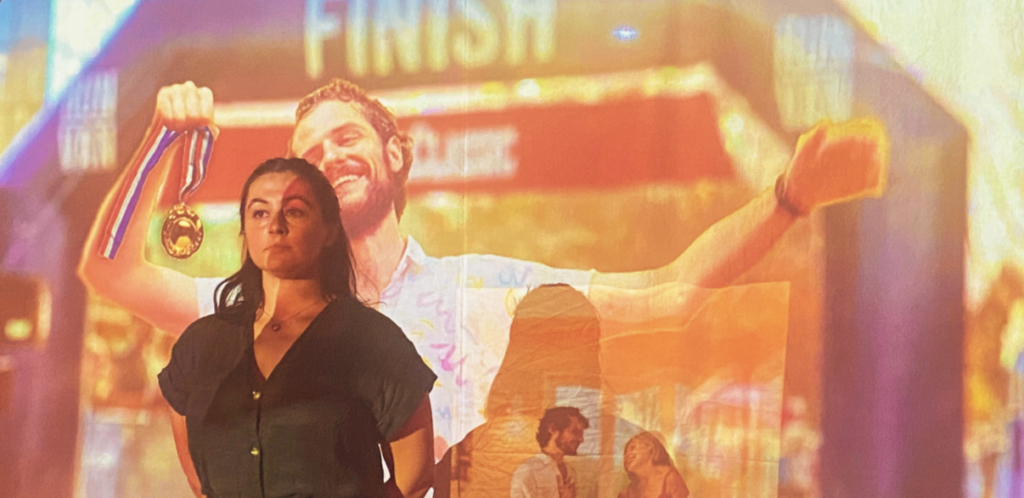
Director/Creator Amanda Smith in the Blood Moon process 

After reviewing observations, conversations, questions, and prototypes from the DDIS project, the following two key dramaturgical findings emerged in connection with the “process beast” that exists at the intersection of digital and other forms of dramaturgical creation practices: experimental and holistic collaboration, and sensory worldbuilding.

We observed that experimental and holistic collaboration was explored through: 1) a lack of scarcity made possible through institutional support and funding 2) rapid prototyping (with writing and digital design) that embraced improvisation, failure, experimentation and trial and error 3) a shared vocabulary and group cohesion established through room set-up, choice of collaborators, and a structured container for experimentation and ongoing conversations before, during and after the workshops 4) fluidity between roles and disciplines: a willingness to work across disciplinary and role-oriented codes towards the goal of each collaborator working dramaturgically. 

We observed that sensory worldbuilding was explored through: 

1) an architectural way of thinking about story (plot, character, setting theme, style, form and stage space. For ex: exploring the layering of 2D and 3D spaces 2) a third space: an exploration of the storied third space that occurs when digital and analog stage spaces overlap, collaborate and interact 3) illusion, memory and perspective: explorations of memory, the subconscious and the spectrum of reality and the surreal. 

We observed that the collaboration between digital dramaturgy and other forms of dramaturgical collaboration catalyzed a unique visual and sonic vocabulary that could be used as the building blocks for story or as prompts for collaboration in the creation work. Some of the observed visual/narrative techniques involved in that storied world-building are:

1) juxtaposition: of visual media, digital and analog stage space, and sound 2) imagery, colour and metaphor as story through visual and audio media 3) rhythm, pattern and repetition through visuals and sound as a narrative structure 

These observations represent tentacles of the beast and are by no means conclusive.
We hope that they continue to offer a container or touchpoint for future dialogue about process. 

These words point at articulating, but not too cleanly or narrowly defining, digital
dramaturgy. This is an ongoing articulation. A living list of possibilities. This text was built by
researcher Erin Lindsay in response to the DDIS process.

a rich dramaturgical approach to sensory world building

a generative, spatial, visual and auditory method for holistic experimentation

an often design-based prompt for collaboration, creation and a lateral way of working

a sometimes non-verbal way to engage with a play and creator or collaborative team

a space for exploration of texture, genre, architecture, emotion, theme, plot, structure;

all the interlocking elements of a play or performance experience

a way to explore the relationship between form, medium, media and writing

a proposal, a challenge, a collaboration, a process and an observation

a mycelium network of evolving relationships, questions and conversations

a reaching and tentacled way of working, creating and seeing

Thank you for exploring process with us.

We will be sharing the full website with more research questions, findings and digital archives in the near future, so stay tuned!

Sincerely,
A dramaturgical nerd.

The Digital Dramaturgy Integration Strategy was made possible through the support of the Canada Council for the Arts.
Canada Council logo


Call for Dramaturgical Collaboration Applications for 2024-2025


Applications for Dramaturgical Collaborations are now open. 

APPLICATION DEADLINE: January 30th, 2024 11:59PM EST

All applicants will receive a response by the end of April 2024 informing them of the outcome of their application for the 2024-2025 season.

The ASL video format of this section is viewable here.


The open call for Dramaturgical Collaborations is PWM’s invitation to playwrights and creators from across Canada to work with us. Together, we engage in deep explorations of story, form and process.

Our Dramaturgical Collaborations begin with one-on-one and ongoing Dramaturgical Conversations in which we discuss the needs of the project and playwright/creator(s). From there, we mutually determine with the artist(s) one or a combination of the following opportunities for the project:

Workshops:  An opportunity to explore a work in progress with actors/collaborators in order to evolve the project. Each Workshop is led by a PWM dramaturg in collaboration with the playwright/creator(s). Text based projects will be read by a company of actors and the playwright and dramaturg will then have the opportunity to ask and explore questions with the company. For non-text based projects, the Workshop is designed around whatever elements create the narrative/event. Sometimes a private reading for invited guests is a part of a Workshop, and it is used as an opportunity to introduce the work to an audience for the first time. The length of a Workshop is determined by the needs of the project.

Residencies: As part of the Dramaturgical Collaboration, PWM may offer dedicated Studio time for exploration (not rehearsal) to a playwright/creator(s) developing a project with PWM. These residencies take place in our studio in Montreal, and are separate from our national residencies at Gros Morne and Tadoussac.

Mentorships:  Mentorships are set up to answer a very specific need in the early stages of a creation process. In collaboration with a PWM Dramaturg, the playwright/creator determines who is best suited to accompany them through this essential phase. This may be an expert in a given discipline, a creator from a similar or different discipline, or a dramaturg with a particular field of experience. The mentor is paid by PWM to work with the artist as a mentee.

To learn more about these and other terms used at PWM, please refer to our glossary.


Considerations for Dramaturgical Collaboration at PWM

The ASL video format of this section is viewable here.

Stage of Development: We accept applications for projects at all stages of development depending on the nature of the work. It could be an idea, a first draft (in whatever form that may be), a new iteration of a project that has already been shared, or a draft that is in an advanced stage of development.

Discipline: This project could be a play, a performance, a digital work (for example: AR/VR, interactive game-based presentation, live or prerecorded virtual performance), or something hybrid in terms of language, discipline, or technology.

Applicants: We welcome individual playwright/creator(s) and collectives to apply directly through our Google form. If you are a theatre company, please contact dramaturg@playwrights.ca to discuss Dramaturgical Collaborations before submitting an application online.

Location: We welcome local and national applications. We work in-person, virtually (for example: by video chat or by use of online collaborative tools), or a combination of both. *Please note that working virtually is an option available to out-of-town artists, as well as local artists based in Montreal.

Because developing plays and performances takes time, PWM has numerous ongoing projects. Therefore, we can only welcome a limited number of new projects per season despite receiving many inspiring applications. We are grateful to everyone who applies.

PWM is committed to creating an environment where all individuals are treated with dignity and respect.  We are continuously working to make all of our programs accessible and inclusive. While recognizing that the identity of each person is fundamentally plural, and multidimensional, we strongly encourage applications from artists who are: Indigenous (First Nations, Métis, and Inuit), Black, POC, racialized (including recent immigrants), 2SLGBTQQIPAA+, d/Deaf, neurodivergent, disabled, living with chronic illness and/or chronic pain. PWM is strongly committed to supporting a wide range of cultural identities and lived experiences, therefore we encourage applicants to self-identify in their application if they are comfortable doing so.


How to apply for Dramaturgical Collaboration at PWM

The ASL video format of this section is viewable here.

You can apply for Dramaturgical Collaboration via our Google form, linked here. Audio and video answers to some of the questions in the form are also welcomed. Click here to preview the form as a PDF.

You will be asked to provide: 

  • General information about you
  • Information about your project 
  • How you would like to work with PWM
  • Your CV and bio and that of any collaborators
  • A sample of the proposed project (if available) or past work 

Your proposal will not be sent until you click the SUBMIT button at the end of the application via the Google form. You will be able to edit your responses until the application’s deadline by reusing the same email address and login. 

If you have any questions regarding Dramaturgical Collaborations, please contact us at dramaturg@playwrights.ca

If you have any questions regarding accessibility, require assistance with your application, or would like to discuss alternative methods of applying and deadline flexibility, please contact accessibility@playwrights.ca. For accessibility information and video tours of our location, please click here.

A Practice Is Born

by Liam Zarrillo


The storytelling process has arrived at a fascinating and complex intersection. Historically speaking, stories and stages have seen a devastating lack of representation of folks who come from marginalized or barrier-facing communities. (This has been both in terms of characters in stories, as well as the artists crafting the stories themselves.) It appears that we are now reckoning with this reality and want to do something about it.

But what do we do? Who do we need to see in stories and on stages? Who has the right to include such characters? Surely the answer cannot be: one may only craft characters that resemble one’s exact lived experience. No, it is necessary for us to be writing stories that are reflective of life. Real life. And real life is diverse.

For myself, from this aim towards authenticity and accountability, a new professional and artistic role was borne. It falls under several titles, depending on the project/project’s phase: that of cultural consultant, experiential consultant or cultural dramaturg.   

For over a year, I have been working in this capacity on a play called O Death by Scout Rexe. This play has received support from several different companies across the country, and has been championed for years by Playwrights’ Workshop Montréal.

Picture of Liam Zarrillo, Scout Rex and Susil Sharma

While I had worn the hat of cultural consultant before coming on board O Death, it is through my experience working on this project that I have begun to truly shape and hone my practice.

Given that O Death is a queer wok, it makes perfect sense that our time together has followed a queer process. A “queer process” can be defined in endless ways, as what makes it “queer” is subjectively defined by the participants themselves. As someone who identifies explicitly as a “queer theatre artist”, my definition of a queer process is one that is inclusive of, but extends beyond solely contemplations on gender & sexuality. I consider a queer process to be one that exists without any rigid pre-existing boundaries or structures. One that is constantly interrogating norms and is flexible and open to redefinition and rearticulation. It is reflective of and responsive to the needs of those involved in an ever-evolving way.

Because my experience working on O Death through PWM has been held inside of this queer context, I have had the space to experiment with and perform this new role in a myriad of ways. O Death tells the story of a trans musician (James) and his queer femme sister (Caddy) hit with several significant obstacles as their music careers are about to take off. I was initially brought on to have some chats and dig in on the authenticity of James’ character. Since then, I have had countless thoughtful sessions and conversations with the playwright. I have read several drafts. I have fed back and been heard. I have been encouraged to bring my dramaturgical experience into my role, allowing for dialogue not only about the authenticity of the trans character, but how his experience fits into his narrative journey. This non-exhaustive list just scratches the surface of such a formative process. 

And now, when I sit down with playwrights or artistic directors to discuss a new cultural consultant contract, I am able to articulate how I work, what I can bring to the table, and offer them options about how we might proceed. The number one goal being inviting in, consensual teaching, healthy boundaries and whatever most serves the story and project at the given moment.

This intersection of authenticity meets accountability is complicated, it is nuanced. I do not believe there is one hard and fast, objective answer or solution to the challenge. There is so much to be mindful of when interacting with the lived experiences of others. We need to ensure we are not taking up space that should belong to others. It is not our right to tell the stories of others, when folks can and should be given the opportunity to tell them for themselves.

I do believe it is our responsibility, however, as arts makers to consider this challenge of diversifying stories and stages, and how we might rise to meet it. There might be no “overcome” in a world as entrenched in problematic and oppressive systems as ours… but I do believe that there is “try”. There is “listen”. There is “do better than the last time.”  There is actively working towards the kind of change we want to see. 

Liam Zarrillo is a theatre artist, educator and consultant based on Treaty 1 territory.

They love and live to agitate, investigate, experiment and uncover. They work with many theatres & companies in Winnipeg and beyond as a playwright, actor, director and cultural dramaturg.

Upcoming works for Liam include The Outside Inn (co-written with Sharon Bajer) premiering at Theatre Antigonish this fall and Volare premiering at Prairie Theatre Exchange this coming spring.

They will also be performing in Daniel Thau-Eleff’s Narrow Bridge, premiering at the Winnipeg Jewish Theatre in early 2023.  

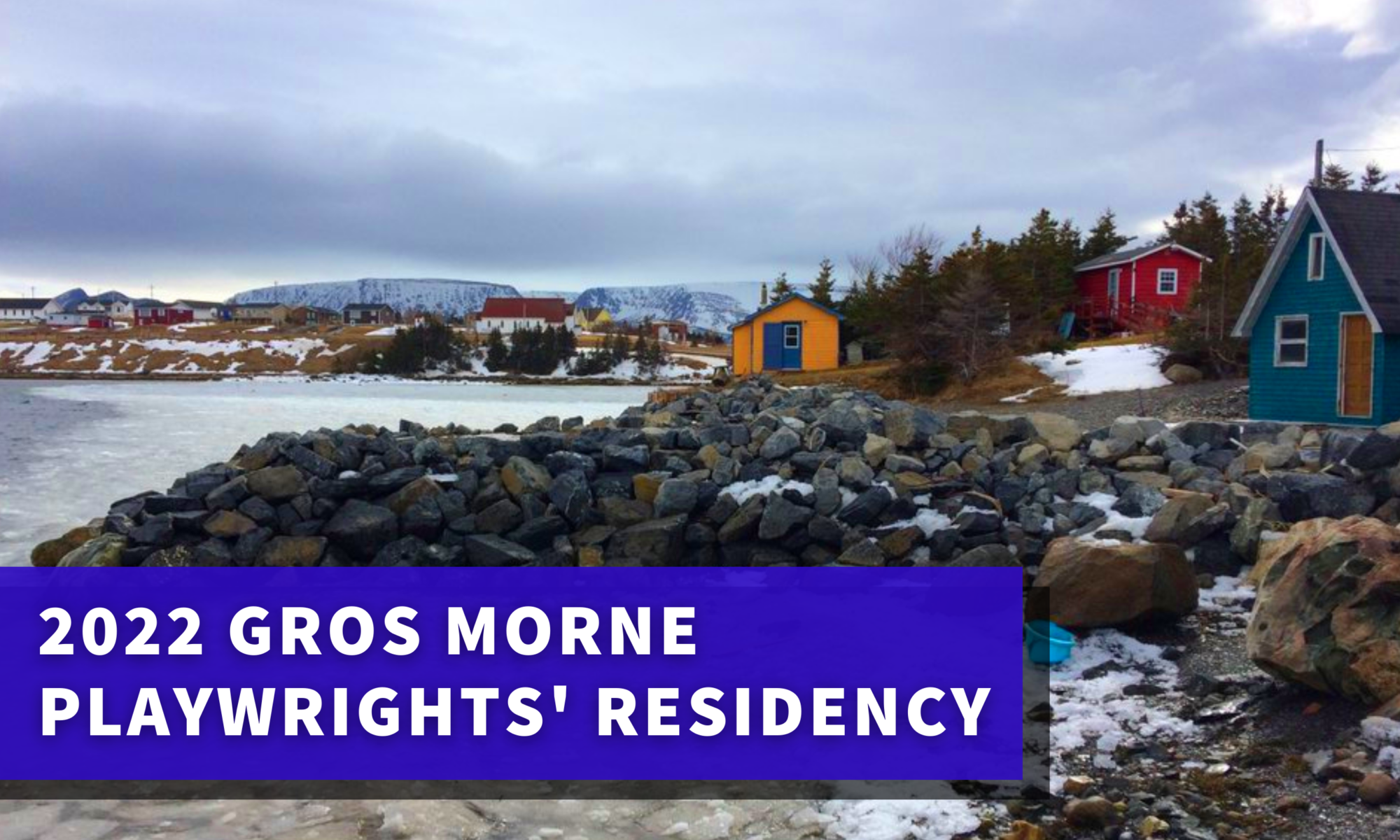
2022 Gros Morne Playwrights’ Residency

Image of a shoreline in Gros Morne featuring colourful salt box houses. The image has a blue banner with white text which reads: “2022 Gros Morne Playwrights’ Residency”

CALL FOR APPLICATIONS

The Gros Morne Playwrights’ Residency is a Playwrights’ Workshop Montréal (PWM) and the Centre des auteurs dramatiques (CEAD) program, created with the participation of Artistic Fraud, and in partnership with the Cole Foundation, Creative Gros Morne, and the Bonne Bay Marine Station. It is a dual-lingual residency that will welcome writers from across the country to Gros Morne, Newfoundland.

ABOUT THE GROS MORNE PLAYWRIGHTS’ RESIDENCY

The Gros Morne Playwrights’ Residency will bring together seven Canadian playwrights over a twelve-day period, from October 13 to 24, 2022. This unique dual-lingual residency is offered by two pan-Canadian organizations, PWM and CEAD, with the participation of Artistic Fraud of NL. It will take place at the Bonne Bay marine station in Norris Point, located in Gros Morne National Park, Newfoundland and Labrador.

English language playwrights are asked to apply through PWM and French language playwrights through the CEAD. These two organizations will assess submissions from all across the country and select three English and three French applications. A seventh spot is reserved for a playwright from Newfoundland and Labrador.

The residency will be led by Fatma Sarah Elkashef, artistic director of PWM, Emma Tiabldo, dramaturg at PWM, and by Sara Dion, dramaturg at CEAD. The residency is an opportunity for solo writing, punctuated with moments of exchange and reading of texts as a group. The Gros Morne Playwrights’ Residency provides playwrights with transportation, accommodation, meals, an honorarium of $800.00, and dramaturgical support.

Applications for this residency are now closed.

HOW TO APPLY

Submission deadline: May 20th, 2022 at 11:59 PM

Please send English submissions by email to: residency@playwrights.ca

With the subject line: 2022 Gros Morne Playwrights’ Residency

Incomplete submissions will not be considered. Selection will be made by an internal committee set up by PWM and CEAD. We will only notify the selected applicants. The selected playwrights will be informed no later than July 8, 2022.

For more information about the residency, please contact residency@playwrights.ca

Eligibility:

  • Be a playwright, writing in English, and having at least one dramatic work workshopped, published, or professionally produced;
  • The play would ideally be in the early stages of development (first draft or slightly beyond);
  • Be available for the whole residency;
  • Be willing to participate in all activities prepared during the residency;
  • For playwrights writing in French please see link to CEAD here.

PWM welcomes all applications to our programs. While recognizing that the identity of each person is fundamentally plural, multidimensional, changing and evolving, we strongly encourage applications from artists who are: Indigenous (First Nations, Métis, and Inuit), Black, POC, racialized (including recent immigrants), 2SLGBTQQIPAA+, neurodivergent, disabled, living with chronic illness and/or chronic pain. PWM is strongly committed to supporting a wide range of cultural identities and lived experiences, therefore we encourage applicants to self-identify in their application if they are comfortable doing so.

Your submission package must include:

  • A statement of your interest in the residency and how it will benefit your process; 
  • A description (PDF, video or audio) of the play (maximum 1 page/2 minute video or audio) with an excerpt of the play in progress (minimum 10 pages, maximum 12 pages);
  • A CV (2 pages maximum) and a short bio (100 words maximum);
  • A copy of your last published, workshopped or produced play.

Please submit all of the above as a single PDF file including links to the audio or video description if relevant.

If you need assistance with this application, please contact Heather Eaton at heather@playwrights.ca.

IMPORTANT

The holding of the residency is dependent on the evolution of the COVID-19 pandemic in Québec and in Newfoundland and Labrador. The residency and its parameters could be reassessed or postponed prior to the residency.

PLACES TO CREATE DURING THE GROS MORNE PLAYWRIGHTS’ RESIDENCY

Bonne Bay Marine Station

Since 2002, the Bonne Bay marine station, located on the magnificent west coast of Newfoundland and Labrador, has had the primary mission of expanding knowledge in marine ecology. In addition, the station also engages in community and artistic activities. Nestled in the small coastal community of Norris Point and with breathtaking views, it is equipped with laboratories, offices, a library, a multimedia theatre, an aquarium, and a building with individual rooms. 

www.bonnebay.ca 

The residence is wheelchair accessible. However, the library and theatre space at the Bonne Bay Marine Station which is used often by the playwrights requires the participant in a wheelchair to leave the residence, travel across the parking lot, into the main lobby entrance to access the library/theatre space.

Gros Morne National Park

Soaring fjords and moody mountains tower above a diverse panorama of beaches and bogs, forests and barren cliffs. Shaped by colliding continents and grinding glaciers, the ancient landscape of Gros Morne national park is a UNESCO World Heritage Site.

www.pc.gc.ca/fra/pn-np/nl/grosmorne/index.aspx

SCHEDULE FOR THE GROS MORNE PLAYWRIGHTS’ RESIDENCY

October 13, 2022

Travel via plane and car to Norris Point, Newfoundland and Labrador (anyone departing West of Ontario will have to add a day of travel).

October 14-23, 2022 

  • Unstructured writing time at Bonne Bay Marine Station;
  • Individual sessions with residency dramaturgs as requested by the playwright;
  • Daily ninety minute group meetings to read and discuss the process;
  • Possibility of a public activity with the community.

October 24, 2022

Departure for home.

A PDF of this call is available here:

Collaboration, Intentionality, and Cultural Dramaturgy

Graphic image of the header for Scout Rexe's blog post. The image has three blue circles with blue and black lines framing a white box with text which reads: “Collaboration, Intentionality and Cultural Dramaturgy" with a small black box underneath which reads: "By Scout Rexe”.

by Scout Rexe


I had the honour of spending last week with dramaturg Fatma Sarah Elkashef (she/her) and cultural dramaturg and performer Liam Zarrillo (they/them) at an invited residency at Playwrights’ Workshop Montréal (PWM) to work on my play with music, O Death.

O Death is a nuanced exploration of trans and queer identities, accountability culture, and the impact of our cultural icons. After being called out by a fan, trans musician James and his queer sister Caddy must reckon with pressure from their family, the media, and the public whilst launching their musical career in the shadow of their rock legend grandfather. Generations collide as James and Caddy discover their grandfather’s corrupted legacy. 

The play is dark and funny. Intimate family conversations are punctuated with a series of surreal mindscapes that offer playful, non-linear access to James’s inner life. I worked on the songs in the show with musicians Susil Sharma (he/him) and Hayden Siemens (they/them) who composed the music, bringing an authenticity that feels essential to the play’s characters.

This project has gone through a rich and deeply collaborative development process. I first met Sarah in 2018 after moving back to Montreal with two small grants from Buddies in Bad Times and Nightwood Theatre to write O Death. I instantly connected with Sarah. We have both been committed to a deep investigation of both the play and our process, and our shared commitment to this has meant we’ve spent a lot of time figuring out how best to create it. 

Early on in the project, I identified the need to work closely with an actor with lived experience to play the role of James–someone who could work with me as a cultural dramaturg, and be properly compensated for that labour, in addition to working as a performer in the development process. When we couldn’t find the right collaborator in Montreal, Sarah and PWM secured additional travel funds for someone who could be brought in from another city in Canada. We couldn’t find the right person, and ended up canceling our workshop at PWM in 2019. 

In 2020, I moved to Manitoba, and Sarah introduced me to Brian Drader (he/him) who is a playwright as well as the Executive Director of the Manitoba Association of Playwrights. He read a draft of O Death and connected me with Liam, who is fiercely intelligent, and considerate, and a gifted actor and dramaturg. 

Liam and I started working together right away, with PWM hiring them on as a cultural dramaturg on the project. We worked intentionally to develop a safer space within each other and our work process, and in so doing, started to form a really meaningful friendship. 

Our dramaturgical conversations lead up to a 16 hour workshop with PWM in 2021 with a full cast. Because of the pandemic, we ran the workshop on Zoom, allowing Liam to join from Winnipeg, me to join from Brandon, Kate Hammer (she/they) from Scotland to play queer femme musician Caddy, and Chip Chuipka (he/him), Jane Wheeler (she/her), Julie Tamiko Manning (she/her), and Sarah Elkashef (she/her) from Montreal. That workshop was incredibly generative, and I continue to feel closely connected to this particular group of performers. 

I spent a few months re-writing the script based on the feedback from the workshop before joining Liam, Kate, and Sarah again as a Collective in Residence at the Royal Manitoba Theatre Centre for 40 hour residency in which we brought in musician Hayden Siemens and focused on the music in the show: the dramaturgy of the music, the creation of new songs, and the creative relationship between the queer sibling characters. As seems to be the case any time I join a group to work on this play, our time was enormously productive; we seemed to do months’ worth of work in just a few days. 

Since that residency, Liam and I have continued to work together dramaturgically with support from the Manitoba Arts Council. We decided to take the week at PWM to focus on James’s trajectory and the ways in which the play can be a healing journey for him: a story of resilience and of coming into oneself.

As a queer artist, I seek to make work that is as complex as the communities with whom it is in dialogue with. Throughout our process, we’ve worked continuously to create more trauma-informed spaces. We structured this residency with check-ins, scene-by-scene read throughs, robust dramaturgical conversations (which inevitably involved cue cards taped to the wall), and check outs. We took long lunches. We allowed ourselves shorter days, and time to stretch. All of this might sound trite, but as an artist with a full-time job in education, the days I have to make theatre feel precious and urgent. It’s my tendency to push. And so too it must be my practice to build out space for myself and my collaborators to be well–to be as safe and self-determining as possible throughout the entire creation process.

PWM offers a space for artists to create outside of the pressures of imminent production. This is vital, as is their practice to support artists holistically over time. My ongoing relationship with the artists I’ve met through creating O Death has been hugely impactful. I will continue to work with Sarah dramaturgically for as long as she’ll have me; in addition to O Death, I’m working with her on my new project Cult Play. Since meeting Kate, we have become writing partners, working long-distance from Canada to Scotland on our TV series called Make It. And I can’t imagine working on another play without Liam–someone whose collaboration and friendship has completely opened up the possibilities for me as a theatre artist and human being; I’ve often walked away from our dramaturgical meetings feeling that not only the work, but I, have been transformed in a meaningful way. 

I can’t wait to be in the room with these brilliant artists again. In the meantime, the next step for me is a writing residency in Riding Mountain National Park for two weeks in the summer. Since O Death is set in a house in the woods, I can’t think of a better place to hide out and finish the next draft.

New Application Process for Dramaturgical Collaboration at PWM

Image with text which reads: "New Application Process"

We are excited to introduce a new application process for Dramaturgical Collaboration to welcome artists and projects to PWM in our 2022-2023 season.

Thank you for your interest! Applications are now closed for our 2022-2023 season. Once we finalize our current season we will open applications for next year!


How to Apply

You can apply for Dramaturgical Collaboration via the google form. Audio and video applications are also welcomed. Please forward audio or video applications to dramaturg@playwrights.ca.

We encourage you to familiarize yourself with Dramaturgy at PWM before submitting your application.

If you have any questions regarding accessibility, or require assistance with this application, please contact accessibility@playwrights.ca. For accessibility information and video tours of our location, please click here.

The application form will remain open year round, but a selection committee will be formed once a year to choose projects for the upcoming season. For best consideration for the 2022-2023 season (August 2022-June 2023) please submit a form by Feb 18th, 2022 at 11:59 PM. All applicants will receive a response by email in April 2022 informing them of the outcome of their application. We welcome individual playwright/creator(s) and collectives to apply. We welcome local and national applications. If you are a theatre company, please contact PWM’s Artistic Director at sarah@playwrights.ca to discuss Dramaturgical Collaborations. 

We are accepting applications for projects at any stage of development. It could be an idea, a first draft (in whatever form that may be), or a new iteration of a project that has already been shared. It could be a play, a performance, a digital work (for example: AR/VR, interactive game-based presentation, live or prerecorded virtual performance) or something hybrid in terms of language, discipline, or technology.

If you have any questions regarding application criteria, please contact dramaturg@playwrights.ca


About Dramaturgical Collaboration at PWM

Dramaturgical Collaboration at PWM will include Dramaturgical Conversation and may also include one or a combination of the following opportunities to be determined mutually by PWM and the playwright/creator(s) according to the needs of the project: Workshops, Residencies, Mentorships, and Public Readings. A glossary of these terms can be found here.

PWM has numerous ongoing projects, including those delayed due to COVID-19 that the organization continues to be committed to. Therefore, at this time, PWM will be welcoming a limited number of new projects. In accordance with PWM’s strategic goals for outreach, we will continue to maintain the flexibility to reach out to playwrights/creator(s), and work that inspires us.

PWM is committed to creating an environment where all individuals are treated with dignity and respect.  We are continuously working to make all of our programs accessible and inclusive. 

PWM welcomes all applicants to our programs. While recognizing that the identity of each person is fundamentally plural, multidimensional, changing and evolving, we strongly encourage applications from artists who are: Indigenous (First Nations, Métis, and Inuit), Black, POC, racialized (including recent immigrants), 2SLGBTQQIPAA+, d/Deaf, neurodivergent, disabled, living with chronic illness and/or chronic pain. PWM is strongly committed to supporting a wide range of cultural identities and lived experiences, therefore we encourage applicants to self-identify in their application if they are comfortable doing so.


Application Form for Dramaturgical Collaboration at PWM

You can apply for Dramaturgical Collaboration via the google form. Audio and video applications are also welcomed. Please forward audio or video applications to dramaturg@playwrights.ca.

We encourage you to familiarize yourself with Dramaturgy at PWM before submitting the application.

Your proposal will not be sent until you click the SUBMIT button at the end of the application via the google form. You will be able to edit your responses until the application’s deadline by reusing the same email address and login.

The deadline to submit is February 18, 2022 at 11:59 PM. All applicants will receive a response by email in April 2022 informing them of the outcome of their application.

If you have any questions regarding accessibility, or require assistance with this application, please contact accessibility@playwrights.ca. For accessibility information and video tours of our location, please click here. If you have any questions regarding application criteria, please contact dramaturg@playwrights.ca.

Accessibility Tools
English (Canada)
Skip to content