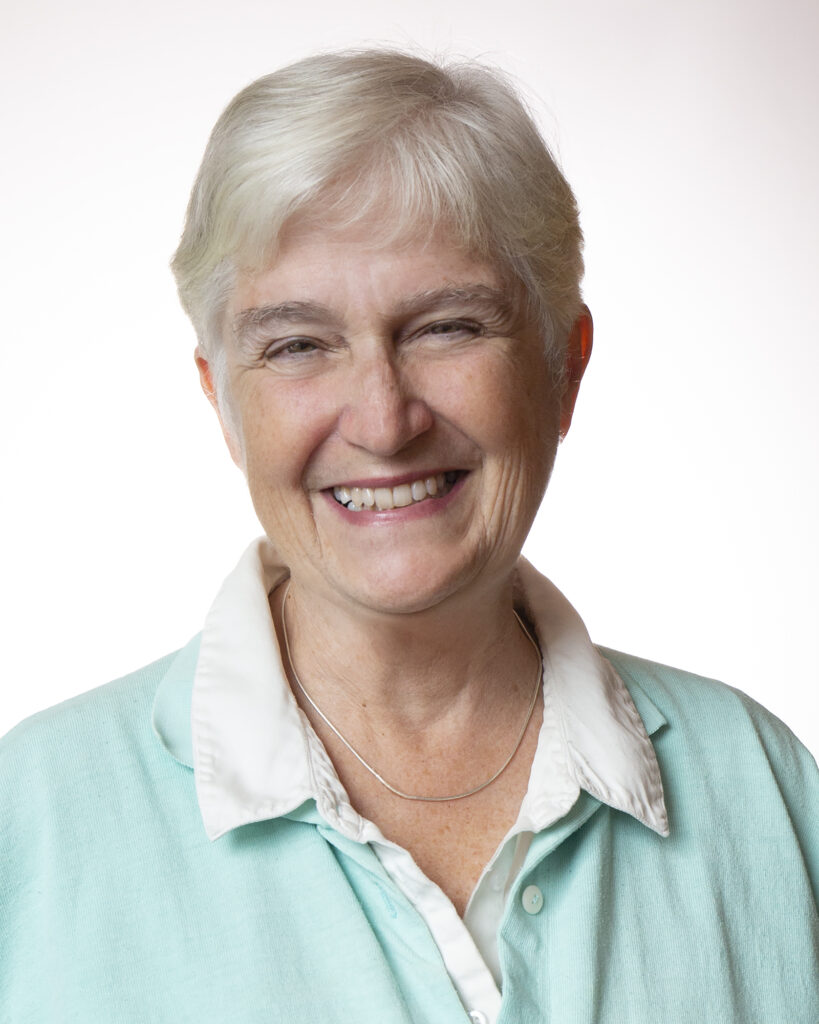
The Fornés Workshop with Mariló Nuñez

More about Exploring Practice Workshops

Application Deadline: Friday, October 6th, 2023 at 11:59PM EST.

Join Chilean-Canadian playwright, director, dramaturge and scholar, Mariló Nuñez , for The Fornés Workshop.

This decentered playwriting workshop uses María Irene Fornés’ anti-Aristotelian approach to playwriting pedagogy. With this method, a writer comes to the workshop with a blank slate; there is no preconceived notion of what the play will be because the process is intuitive and improvisational. Using centering movement, visualization, drawing, the found object/word, sense memory, and a communal writing experience, the participants will experience unique ways to finding character and story.

María Irene Fornés (1930-2018) was a Cuban-American playwright, director, and teacher. She wrote over forty plays and received nine Obie awards. She taught her playwriting method at INTAR, where she founded the Hispanic Playwrights Lab.


SCHEDULE

Monday, October 30th – Thursday, November 2nd, 2023,

10AM – 2PM.

In person at the PWM Studio.

LOCATION

PLAYWRIGHTS’ WORKSHOP MONTRÉAL
7250 Clark Street, #103
Montréal, QC
H2R 2Y3

If you have any questions regarding accessibility, or require assistance with this application, please contact accessibility@playwrights.ca

Click here for accessibility information and video tours of our location.


HOW TO APPLY:

If you are interested in applying, please fill out this Google Form by 11:59 PM on Friday, October 6th, 2023.


PWM is committed to creating an environment where all individuals are treated with dignity and respect.  We are continuously working to make all of our programs accessible and inclusive. While recognizing that the identity of each person is fundamentally plural, and multidimensional, we strongly encourage applications from artists who are: Indigenous (First Nations, Métis, and Inuit), Black, POC, racialized (including recent immigrants), 2SLGBTQQIPAA+, neurodivergent, disabled, living with chronic illness and/or chronic pain. PWM is strongly committed to supporting a wide range of cultural identities and lived experiences, therefore we encourage applicants to self-identify in their application if they are comfortable doing so.

Participation is free. Workshop participants are selected based on the complementary experience of the collective group. We encourage all levels of experience to apply.


ABOUT THE WORKSHOP LEADER:

Mariló Nuñez is a Chilean-Canadian playwright, director, dramaturge and scholar. She is a 2021 winner of the Johanna Metcalf Performing Arts Award in Theatre. She is the 2023-24 Playwright-in-Residence at Carousel Players Theatre for Young Audiences where she will premiere her play Mapu and was the 2021 Playwright-in-Residence at Aluna Theatre. She has been a member of playwright’s units at Factory Theatre, Tarragon Theatre, Cahoots Theatre and Nightwood Theatre. She was McMaster University’s first Playwright-in-Residence in 2018 and was the recipient of the Hamilton Arts Awards for Established Theatre Artist. Her plays include: Three Fingered Jack and the Legend of Joaquin Murieta, El Retorno/I Return, Last Supper, Huinca, Foxy: Tales of An Urban Zorra, INQUEST, Demos Kratos, and Sangre Redux. She teaches playwriting at theatres and universities across the country using the Fornes Method. She was founding Artistic Director of Alameda Theatre Company, a company dedicated to developing the new work of Latinx Canadian playwrights. She has an MFA in Creative Writing from the University of Guelph and is currently obtaining her Ph D. in Theatre & Performance Studies at York University. Her play El Retorno/I Return has been turned into a podcast for Radio Aluna Theatre. 

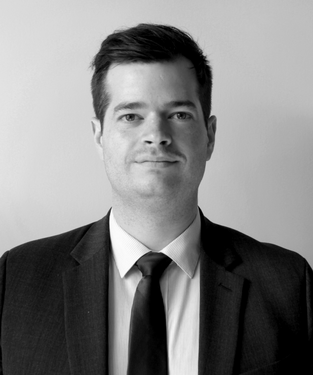
Headshot photo credit: Luis Mora


This workshop is financially supported by
Intervention -- Compētences. Un soutien aux activités de formation continue en culture. 

Compétence Culture. Comité sectoriel de main-d'œuvre en culture. 
Avec la participation financiére de Quebec.

Collaboration, Intentionality, and Cultural Dramaturgy

Graphic image of the header for Scout Rexe's blog post. The image has three blue circles with blue and black lines framing a white box with text which reads: “Collaboration, Intentionality and Cultural Dramaturgy" with a small black box underneath which reads: "By Scout Rexe”.

by Scout Rexe


I had the honour of spending last week with dramaturg Fatma Sarah Elkashef (she/her) and cultural dramaturg and performer Liam Zarrillo (they/them) at an invited residency at Playwrights’ Workshop Montréal (PWM) to work on my play with music, O Death.

O Death is a nuanced exploration of trans and queer identities, accountability culture, and the impact of our cultural icons. After being called out by a fan, trans musician James and his queer sister Caddy must reckon with pressure from their family, the media, and the public whilst launching their musical career in the shadow of their rock legend grandfather. Generations collide as James and Caddy discover their grandfather’s corrupted legacy. 

The play is dark and funny. Intimate family conversations are punctuated with a series of surreal mindscapes that offer playful, non-linear access to James’s inner life. I worked on the songs in the show with musicians Susil Sharma (he/him) and Hayden Siemens (they/them) who composed the music, bringing an authenticity that feels essential to the play’s characters.

This project has gone through a rich and deeply collaborative development process. I first met Sarah in 2018 after moving back to Montreal with two small grants from Buddies in Bad Times and Nightwood Theatre to write O Death. I instantly connected with Sarah. We have both been committed to a deep investigation of both the play and our process, and our shared commitment to this has meant we’ve spent a lot of time figuring out how best to create it. 

Early on in the project, I identified the need to work closely with an actor with lived experience to play the role of James–someone who could work with me as a cultural dramaturg, and be properly compensated for that labour, in addition to working as a performer in the development process. When we couldn’t find the right collaborator in Montreal, Sarah and PWM secured additional travel funds for someone who could be brought in from another city in Canada. We couldn’t find the right person, and ended up canceling our workshop at PWM in 2019. 

In 2020, I moved to Manitoba, and Sarah introduced me to Brian Drader (he/him) who is a playwright as well as the Executive Director of the Manitoba Association of Playwrights. He read a draft of O Death and connected me with Liam, who is fiercely intelligent, and considerate, and a gifted actor and dramaturg. 

Liam and I started working together right away, with PWM hiring them on as a cultural dramaturg on the project. We worked intentionally to develop a safer space within each other and our work process, and in so doing, started to form a really meaningful friendship. 

Our dramaturgical conversations lead up to a 16 hour workshop with PWM in 2021 with a full cast. Because of the pandemic, we ran the workshop on Zoom, allowing Liam to join from Winnipeg, me to join from Brandon, Kate Hammer (she/they) from Scotland to play queer femme musician Caddy, and Chip Chuipka (he/him), Jane Wheeler (she/her), Julie Tamiko Manning (she/her), and Sarah Elkashef (she/her) from Montreal. That workshop was incredibly generative, and I continue to feel closely connected to this particular group of performers. 

I spent a few months re-writing the script based on the feedback from the workshop before joining Liam, Kate, and Sarah again as a Collective in Residence at the Royal Manitoba Theatre Centre for 40 hour residency in which we brought in musician Hayden Siemens and focused on the music in the show: the dramaturgy of the music, the creation of new songs, and the creative relationship between the queer sibling characters. As seems to be the case any time I join a group to work on this play, our time was enormously productive; we seemed to do months’ worth of work in just a few days. 

Since that residency, Liam and I have continued to work together dramaturgically with support from the Manitoba Arts Council. We decided to take the week at PWM to focus on James’s trajectory and the ways in which the play can be a healing journey for him: a story of resilience and of coming into oneself.

As a queer artist, I seek to make work that is as complex as the communities with whom it is in dialogue with. Throughout our process, we’ve worked continuously to create more trauma-informed spaces. We structured this residency with check-ins, scene-by-scene read throughs, robust dramaturgical conversations (which inevitably involved cue cards taped to the wall), and check outs. We took long lunches. We allowed ourselves shorter days, and time to stretch. All of this might sound trite, but as an artist with a full-time job in education, the days I have to make theatre feel precious and urgent. It’s my tendency to push. And so too it must be my practice to build out space for myself and my collaborators to be well–to be as safe and self-determining as possible throughout the entire creation process.

PWM offers a space for artists to create outside of the pressures of imminent production. This is vital, as is their practice to support artists holistically over time. My ongoing relationship with the artists I’ve met through creating O Death has been hugely impactful. I will continue to work with Sarah dramaturgically for as long as she’ll have me; in addition to O Death, I’m working with her on my new project Cult Play. Since meeting Kate, we have become writing partners, working long-distance from Canada to Scotland on our TV series called Make It. And I can’t imagine working on another play without Liam–someone whose collaboration and friendship has completely opened up the possibilities for me as a theatre artist and human being; I’ve often walked away from our dramaturgical meetings feeling that not only the work, but I, have been transformed in a meaningful way. 

I can’t wait to be in the room with these brilliant artists again. In the meantime, the next step for me is a writing residency in Riding Mountain National Park for two weeks in the summer. Since O Death is set in a house in the woods, I can’t think of a better place to hide out and finish the next draft.

PWM’s Accessibility Committee

Image with text that reads: "Finding the love: PWM's Accessibility Committee"

An overview of our process so far


Over the past several years, Playwrights’ Workshop Montréal (PWM) has been researching ways to create more accessible and inclusive spaces. In 2019, we hired Kéroul to conduct an accessibility audit of our physical spaces, and they gave PWM a report with many recommendations. As tenants in the building, we have been limited in what changes we can make to the physical spaces, and so we shifted our focus to areas where we have more immediate agency to make changes: digital and cultural accessibility. In 2020-2021, PWM worked with Accessibility and Inclusion Consultant Clary Chambers to find tools, resources and approaches to creating more inclusive and accessible digital and cultural spaces. As Vice President of PWM’s Board of Directors, Corrina Hodgson, describes in the article below, in the winter and spring of 2021 we invited six D/deaf and disabled artists from the community to speak with us about how PWM could become more accessible and more inclusive. 


FINDING THE LOVE: PWM’S ACCESSIBILITY COMMITTEE 2020-2021

By Corrina Hodgson

CHALLENGING ACCESSIBILITY AUDITS

Like many theatre organizations in Montréal, PWM is located in an inaccessible building that it leases. Unsurprisingly, it scored low on an accessibility audit executed two years ago.

While the results of the audit were factually correct, they did not sit right with me. I am a disabled playwright and I have served as an artist member on PWM’s Board of Directors for the past four years. The audit did not capture the culture of the organization that I know.

Enter Clary Chambers.

We decided to move beyond an accessibility audit and expand our definition of accessibility to include Cultural and Digital Accessibility. This definition of accessibility came from a workshop that I’d attended in 2019 by Spark Clarity run by Clary Chambers. PWM hired Clary Chambers to train staff members and assist me with the first meeting of the Accessibility Committee. 

One core learning acquired from Clary this time around was the idea that accessibility begins at the point of contact. It’s not enough to have an accessible space or event. We must make our communications accessible. This impacted how we communicated with the members of the Accessibility Committee about our meetings. Every email included an ASL  video, and a separate spoken video with closed captions. This allowed our emails to be read, listened to, listened to and read at the same time, or watched. Beyond communicating the content of the email, this approach communicated that everyone’s welcome and that everyone’s accessibility needs are valid.

THE MEETINGS

Image of Clary Chambers sitting outside a pastel pink building with a notebook.

“ . . . [W]e are not struggling because there’s something wrong with us; we are struggling because the systems that were set in place were for a specific group of people, and they’ve never been changed.”  — Clary Chambers

For six meetings over six months — 12 hours total — artists Cherie Pyne, Violette Kay, Willow Cioppa, Penina Simon, Sage Lovell, Lois Brown, and I (Corrie Hodgson) — met with PWM staff in attendance,  including staff participant Heather Eaton to discuss all things accessibility and how disability, chronic pain, and chronic illness impacts our life and art, both before and during COVID (acknowledging that post-COVID has yet to exist.) We spoke of our interactions with PWM, discussed how PWM could be an ally, and future dreamed.

PWM and I urged participants to inform us of any accommodations that would make meetings more accessible for them prior to or during meetings. This seems simple, but isn’t. As one participant pointed out, we don’t always know what we need, we just know this isn’t it. And another one said that we’re so used to being asked for what we need, but not for what makes things easier — and that’s a big difference.

Some accommodations we made were that we had ASL-English interpreters and encouraged everyone to make use of chat features. Speakers identified themselves prior to speaking. Participants were welcome to turn cameras off or keep them off for the entire meeting if that felt right. They were welcome to fidget, stand up and stretch, or attend while lying in bed. Nothing was interpreted as disinterest or “unprofessional.” Instead, we welcomed all bodies in all states of being, and all modes of communication were treated equally.

This approach to meetings sent the message that you do not have to fit yourself to the meeting. Instead, the meetings were made to fit our participants. Their form was malleable so that the humans didn’t have to be.

This malleability of structure is something the committee agreed was a shared value as disabled artists. Many of the group members wondered if PWM could extend this flexible approach to other aspects of its work. For example, could PWM livestream their events for those of us who are physically incapacitated but would like to attend? Could PWM’s programs be made accessible remotely? And, of course, the ultimate malleability extends to deadlines. Many of us are writing on *Crip Time and therefore require flexibility with deadlines. In a field that defines “professionalism” as meeting deadlines (among other things), could PWM become a leader in challenging this definition and explore flexible deadlines with disabled playwrights? Could they fight for longer development time for the creation of new works? As Violette Kay pointed out, we just watched extensions be handed out universally and no one had to ask, so why do we think it’s so impossible to grant them to individual artists?

A zoom screen shoot of one of the accessibility meetings. Featuring (left to right, top to bottom): Corrina Hodgson, Emma Tibaldo, Fatma Sarah Elkashef, Sage Lovell,  Jordan (ASL-English Interpreter), Jesse Stong, Willow Cioppa, Penina Simon, Jennier (ASL-English interpreter), Marc Duez, Heather Eaton, Cherie Pyne, Violette Kay, Emily Soussana, Andrew Scriver, Lois Brown and Lesley Bramhill.
A zoom screen shot of one of the accessibility meetings featuring (left to right, top to bottom): Corrina Hodgson, Emma Tibaldo, Fatma Sarah Elkashef, Sage Lovell, Jordan (ASL-English Interpreter), Jesse Stong, Willow Cioppa, Penina Simon, Jennifer (ASL-English interpreter), Marc Duez, Heather Eaton, Cherie Pyne, Violette Kay, Emily Soussana, Andrew Scriver, Lois Brown and Lesley Bramhill.

HOW COVID IMPACTED OUR ART

A common experience amongst participants was a surge in survival employment during the pandemic. While most of our peers suffered financial losses, many of us were busier than ever. After all, we are a population that lives in quasi-lockdown without a pandemic, so the businesses we have developed — from music lessons and podcasting to consulting and technical writing — are well suited to COVID circumstances. 

While suddenly earning more than ever before, and doing so in a time when many were struggling, was fortunate, it came at the expense of our creativity. Many of us felt obligated to take on as much paid work as possible, knowing that when the pandemic was over, we would once again be relegated to the sidelines and our earnings would return to pre-pandemic levels. The result amongst members was a sense of pushing past limits and not having anything left to give to creative projects. And there was a mounting guilt and panic about those projects, some of which had deadlines looming and dramaturges waiting for new drafts.

Sage Lovell spoke about how COVID had reduced opportunities for Deaf artists while accessibility measures increased options for Deaf spectators. This led to questions of how PWM could attract and support Deaf creators. Sage also reminded us of the very real fatigue brought on by digital spaces — something that everyone has experienced by this point in the pandemic.

Our sense of being overwhelmed by our side gigs and day jobs happened right when we were the most disconnected from our creative communities. We didn’t get to finish work and head to the theatre to gather in person with colleagues for a reading or show. We no longer had informal hang outs in local cafés to drink coffee and write. Many members longed for some sort of casual, drop-in group on a digital platform where we could congregate and support one another while writing. Again, flexibility in this vision played a key role, so that writers could come and go as needed.

Moreover, many of us live in small abodes. Penina Simon bemoaned the loss of her beloved cafés as that’s where she was used to writing. Similarly, Willow Cioppa spoke to the difficulty of working, eating, doing therapy and then trying to be creative all at the same table in their apartment.

POST-PANDEMIC ACCESSIBILITY

For many of us, defining a post-pandemic world is difficult. We struggle to imagine a time of safety after these past two years. Merely imagining physical interactions with friends — never mind strangers — induces anxiety. Willow Cioppa foregrounded the important role that consent will play in our post-pandemic world, as we will all be at different comfort levels with physical touch, with hugs, and it will all have to be negotiated.

When committee members were asked if they felt safe attending PWM as an artist or spectator in the future, we all agreed that we did. We know that PWM as an organization is thorough and careful, that safety measures will be followed.

But then someone raised the question of how would we get to PWM? How many of us felt safe on the metro? On busses? Not one of us. 

And Violette Kay raised a larger, more important question, addressing in-person endurance. The thought of entering an in-person five-day workshop seemed, well, exhausting.

It’s not just a question of if we feel safe.

It’s a question of if we are ready.

Or maybe when.

And what we do until then.

PWM has striven to be a safe space and creative hub prior to and during the pandemic. We would love to see it maintain a digital presence both during and after the pandemic. That presence would bring safety and creativity to its community on a consistent basis. While we have been overwhelmed and lacking in focus throughout the pandemic, we have fought and continue to fight to maintain an artistic practice. Knowing that we can rely on PWM to remind us that we are artists first, that our art matters, and that our voices have important things to say brings a lived experience to the slogan “Access is Love.”

*Crip Time is explained by Alison Kafer in her book, Feminist, Queer, Crip as “Rather than bend disabled bodies and minds to meet the clock, crip time bends the clock to meet disabled bodies and minds.”

ABOUT CORRINA HODGSON

Headshot of Corrina Hodgson.

Corrina (she/her) is a Queer and disabled playwright and dramaturg with a passion for nontraditional story structure. Raised in Toronto, Corrina had the good fortune of being on writing units at Buddies in Bad Times Theatre and Nightwood Theatre before obtaining her MFA in Creative Writing at UBC. She has been playwright in residence at the University of Lethbridge and her work has been produced across Canada and in the US, as well as on CBC Radio One. She is the co-creator and Artistic Producer of The Rose Festival, Montreal’s multidisciplinary festival for Queer Creators.


OUR COMMITMENTS

Below is a list of actions PWM has taken since the Accessibility Committee conversations, as well as actions we are committed to taking in the coming year and beyond. These actions are informed by multiple sources, including those already mentioned, as well as PWM’s staff and board. We are learning more each week, and welcome feedback from community members so that we may continue to render our practices and spaces increasingly inclusive. To ask questions or offer feedback, please email: accessibility@playwrights.ca 

We acknowledge that PWM is evolving as a company, our dramaturgical thinking is dynamic, and we commit to the actions below being dynamic as well. 

TopicActionTimeline
CommunicationsInclude videos of how to get to PWM’s location and how to get to our office/studio once inside the buildingcompleted
CommunicationsOffer content advisories for live events, and contact person and their contact information to reach out to for more informationongoing
CommunicationsExamine user experience to make accessibility information very easy to find on PWM’s websiteongoing
CommunicationsAdd alt-text & image descriptions to the website and all social mediaongoing
CommunicationsUse a maximum of 5 words of text in all graphicsongoing
CommunicationsOffer general and technical guidance and assistance for applications to PWM programs/job openingsongoing
CommunicationsSituate accessibility information and access needs requests at the top of blog articles or event pages on the websiteongoing
CommunicationsAdd a video tutorial to our Accessibility webpage on how to use the accessibility features on PWM’s websitecompleted
CommunicationsAdd captioned video invitations to events and programming communicationsin progress
CommunicationsAdd voice-over to videos on our Accessibility webpage on how to get to PWMcomplete
CommunicationsAdd photos of the PWM studio with people to the Accessibility webpagecomplete
CommunicationsOffer diverse modes of communication for applications at PWMongoing
CommunicationsUse a relay service for telephone communicationsongoing
ProgrammingProvide support to artists as they adapt to digital and hybrid mediums of creation and dissemination through Digital Dramaturgy Clinicscompleted, ongoing
ProgrammingCheck-in with artists about comfort, safety and preferred work conditions during the process of organizing development workshopscompleted, ongoing
ProgrammingAdd drop-in hours to the remote Writers’ Room to accommodate different scheduling needscompleted, and on hiatus
ProgrammingCommunicate about the Writers’ Room through email and a shared Google calendar rather than Facebookcompleted, and on hiatus
ProgrammingHire an artist with lived experience with disability/chronic pain to co-facilitate the Writers’ Roomcompleted, and on hiatus
ProgrammingHire and collaborate with artists from the d/Deaf community on their artistic projectsongoing
ProgrammingSend tech gear to artists that need it for participation in programmingcompleted, ongoing
ProgrammingOffer hybrid, in-person and remote workshopscompleted, ongoing
ProgrammingOffer technical orientation workshops and/or video tutorials for different digital platforms for artists prior to activitiesongoing
Public EventsImplement and communicate about accessibility for eventsongoing
Public EventsPublicize PWM’s current practices and structures in place for eventsin progress
Public EventsDesignate a PWM staff member as an Accessibility Liaision, available to respond to questions and requestscompleted
Public EventsHire ASL-English interpreters for live readingsongoing to the best of our ability
Public EventsProject script during public eventsongoing on a case-by-case basis
Public EventsOffer livestream options for public eventsongoing on a case-by-case basis
Staff TrainingTwo PWM staff members begin learning ASLongoing
Staff TrainingBegin staff training on working with neurodiverse artists, welcoming d/Deaf, disabled and/or neurodiverse members of the public to cultural spacesin 2023
Working with StakeholdersInclude accessibility support requests in all funding request budgetsin progress
Working with StakeholdersContinue to advocate to funding bodies for more support and longer and more flexible creation & development time in new theatre creationongoing
Working with StakeholdersWork with property management to install non-slip and contrasting colour bands on the stairs inside the entrance of the buildingPursued and rejected by current property management
Working with StakeholdersWork with property management to apply to the City of Montreal for a reserved parking spot directly in front of the building entrance at 7250 ClarkPartially complete: 
After discussions with the city, PWM was informed that permanent accessible parking spots for the building cannot be approved. However, in response to our advocacy, two parking spaces directly in front of the building will be designated as 2-hour parking starting in September 2024. This will accommodate drop-offs and short-term parking for artists with reduced mobility.

THIS CONSULTATION PROJECT WAS SUPPORTED BY

CAM Logo

Job offer: Communications Coordinator

Job Offer - Communications Coordinator
ORGANIZATION DESCRIPTION:

Established in Montreal in 1963, Playwrights’ Workshop Montréal (PWM) is a nationally-mandated theatre development centre led by a team of renowned dramaturgs and arts administrators. We are a bilingual non profit organization dedicated to collaborating with artists in the development of new works of theatre and performance. Read more about PWM’s mission and mandate at: www.playwrights.ca/about-us

JOB OVERVIEW:

PWM is currently seeking a part-time (20hrs/week) Communications Coordinator for an indeterminate term contract, beginning immediately.

Reporting to the General Manager, the Communications Coordinator is responsible for the coordination and execution of PWM’s marketing and communications strategies. The Communications Coordinator will create, produce and distribute materials using PWM’s communications channels and will monitor and maintain PWM’s website and social media platforms.

At this time, PWM is reviewing its communications platforms and marketing strategies (website, newsletter, social media, etc) with the assistance of three consultants who specialize in three distinct areas: 1)  SEO and communications analytics, 2) terminology of communications, the expression of programming and terms of engagement, and transparency of organizational operations through an equity lens and 3) the creation of artistic content for online engagement. The Communications Coordinator will contribute to the strategic thinking and planning during this process, and also assist with the implementation of findings.

SALARY, HOURS and BENEFITS:

The position pays $19/hour, payable in correspondence with net amounts after all standard employment deductions. The position includes 10 days (40 hours) of paid vacation during the period of December 23 to January 3 and 5 days (20 hours) of paid vacation during the month of July.

Working hours are 20 hours a week, on a schedule determined with the General Manager. When additional projects arise, the Communications Coordinator may be asked to work up to an additional 5 hours a week.

DUTIES AND RESPONSIBILITIES:
  • Write a variety of different content to support communications and marketing efforts, including newsletters, website, social media, brochures and press releases
  • Design promotional materials for PWM’s communication and marketing efforts that include images and or/video suitable for social media sharing, mailchimp, email and website
  • Design other communications materials such as posters, postcards, signage, letterhead, brochures, business cards, etc
  • Assist the PWM team in developing and implementing a communications strategy designed to further the organization’s objectives
  • Plan and execute social media campaigns
  • Manage, maintain and update PWM’s website
  • Manage and adhere to a Communications budget as given by General Manager
  • Manage and compile calls from the community that would benefit artists that PWM closely works with (i.e. Playwrights, Translators, Dramaturgs)
  • Track and promote PWM-developed plays once they go into production
  • Assist the General Manager in the creation and follow through of recognition and crediting contracts with PWM collaborators
  • Monitor analytics and create reports detailing the successes and failures of communications campaigns and strategies
  • Stay up to date on industry trends and make recommendations for adjustments to communications strategies and practices
  • Respond to media inquiries and maintain relationships with journalists and other members of the press
QUALIFICATIONS:
  • 3+ years experience in a communications or marketing role
  • Superior time management and organizational skills and ability to meet deadlines
  • An analytical mind and ability to think critically
  • Exceptional writing and interpersonal communication skills in both English and French
  • Experience in the design, execution and distribution of digital and print materials (posters, postcards, ads, etc)
  • Ability to work both independently and as part of a team
  • Knowledge of WordPress, SEO and Google Analytics
  • Knowledge of G Suite, MS Word, Excel and Powerpoint, Photoshop, and social media platforms
  • Knowledge of CiviCRM, HTML coding, photography, and video editing is an asset
  • Knowledge of email marketing software such as Mailchimp
  • Proven knowledge of communications and marketing ethics and best practices
  • Comfort with managing multiple projects at the same time and ability to adapt
EDUCATION:

Graduate of communications, marketing, and/or public relations program or equivalent.

APPLICATION:

Please email your Cover Letter and CV to Lesley Bramhill, gm@playwrights.ca, with the subject line “Application Communications Coordinator”. Please include one writing example (your choice of a press release, a brochure, a social media post, etc) and one digital or print design example (a poster, postcard, image that was shared online, etc). Applications should also include a minimum of 3 references.

Candidates must submit applications by 12 noon on  August 23, 2019. However, applications will be considered as they come in and interviews may be held prior to this date. Ideally, the selected candidate will begin training sometime the week of August 26, 2019 and take over the position as of the week of September 3, 2019.

Playwrights’ Workshop Montreal  is an equal opportunity employer and values diversity in its workforce, encouraging applications from all qualified individuals. We strongly encourage applications from members of equity seeking groups, including but not limited to:  those whose lives have been impacted by illness or disability*, BIPOC communities, LGBTQIIA+ communities, newcomers to Canada and from all groups who experience marginalization. We encourage applicants to self-identify in their cover letter if they are comfortable doing so.

We thank all applicants for their interest but only those selected for an interview will be contacted.

*please visit our website for accessibility information at PWM: www.playwrights.ca/accessibility

EstérELLE Writers-in-Residence

EstérELLE Writers-in-Residence

(Pilot Project)

When: October 12 to 19, 2019
Where: Estérel, Québec

PWM is proud to announce a new initiative in partnership with Anna Dupuis Zuckerman focused on the development of new plays by English Language Québec female and female-identifying playwrights. This seven-day residency is specifically tailored to support the development of work by mid-career playwrights, offering the time and space to think, write and exchange ideas in a quiet environment. The only scheduled events are meals and a daily late afternoon discussion session. Dramaturg Fatma Sarah Elkashef will be present for dramaturgical consultation.

Location: Peaceful, welcoming, spacious family home on Lac Dupuis in Esterel, part of the Laurentian mountains. As we approach one of the oldest stones on earth, the breath grows stronger, a wholeness, a peace settles. Memories and futures entwine, and stories reveal themselves.

Details:

– The residency will take place over seven days
– PWM Dramaturg Fatma Sarah Elkashef will be the residency dramaturg
– Focus on female and female-identifying mid-career English Language Québec playwrights
– Transportation, accommodations and food will be covered by the residency
– An honorarium will be given to each selected participant
– The menu is vegetarian, but can accommodate fish
– The residency is designated sober-living and scent-free
– No pets are allowed
– Accessibility: Uneven cobblestone driveway (not wheelchair accessible).

Accommodation details: Each participant will have a private room and quiet workspace. There are 2 shared bathrooms for 5 artists.


SUBMISSION GUIDELINES

Submission deadline: August 1, 2019
Notification of selected projects: August 16, 2019

In a single PDF file please send us the following:

– A short description of your project.
– A short explanation of how a 7-day writers residency would benefit the project and your work as a writer.
– A ten page sample of the play (maximum).
– A bio and CV.

Subject line of the email: EstérELLE Writers-in-Residence
Email: residency@playwrights.ca
For accessibility inquiries please contact Heather Eaton: heather@playwrights.ca, 514-843-3685

Accessibility Tools
English (Canada)
Skip to content